
IN SHORT
Dysphagia, or a swallowing disorder, is defined as difficulty swallowing, which affects, among other things, the ability to eat. It affects people of all ages but is more common in children and the elderly. Its causes can be functional or neurological. Its consequences can be significant, especially if pulmonary complications arise. The ENT specialist will provide an informed diagnosis, conduct a thorough evaluation, and make targeted recommendations.
What Is Dysphagia?
Eating is an activity common to all human beings. In particular, it nourishes and hydrates the body, two elements essential to survival.
Dysphagia, often defined as difficulty swallowing, affects a person’s ability to eat, drink, take medication, or practise good oral hygiene[1]. An ENT specialist can provide guidance if you are experiencing dysphagia.
Furthermore, “The swallowing mechanism involves a complex process during which food, liquids, medication, or saliva are moved from the mouth to the stomach, passing through the pharynx and the esophagus.”[2]
In this sense, “swallowing results from the precise coordination of the activation or inhibition of more than 25 pairs of muscles in the mouth, pharynx, larynx, and esophagus under the control of the nervous system.” ENT practitioners have a thorough understanding of how these muscles function and of the complex coordination from the mouth to the esophagus.
According to the literature, it is important to note that dysphagia is not a condition in the strict sense; rather, it is the result of a symptom. From this perspective, it is a consequence of a condition or treatment affecting a person’s physical or cognitive abilities.
[1] https://univ-rennes.hal.science/hal-02309145v1
[2] http://www.santecom.qc.ca/Bibliothequevirtuelle/INESSS/9782555010574.pdf
What Are the Causes?
While dysphagia occurs across all age groups, it is more common in children and older adults. Generally speaking, it affects 10 to 20% of the population, and this figure rises to 48% among older adults.
The vast majority of cases of dysphagia are caused by neurological disorders. Examples include strokes, Parkinson’s disease, muscular dystrophy, amyotrophic lateral sclerosis (ALS), autism spectrum disorders, and others.
The literature also reports other causes:
- Cardiorespiratory disease
- Gastrointestinal disorder
- Mental health issue
- Etc.
Finally, dysphagia can occur without a clear medical diagnosis or identifiable treatment, which can lead to an underestimation of the symptoms and their impact. A visit to an ENT specialist will help clarify the situation.

What Are the Main Consequences?
The consequences of dysphagia can be particularly serious, affecting a person’s health and even proving fatal.
In this regard, pulmonary complications, such as aspiration pneumonia or even airway obstruction, are among the most severe consequences. These types of situations are more common among geriatric patients.
In short, dysphagia is associated not only with a loss of functional independence but also with an increased risk of aspiration pneumonia.
How Can an ENT Specialist Help You with Dysphagia?
First, it is important to note that your ENT specialist is the leading expert in diagnosing the underlying causes of your dysphagia.
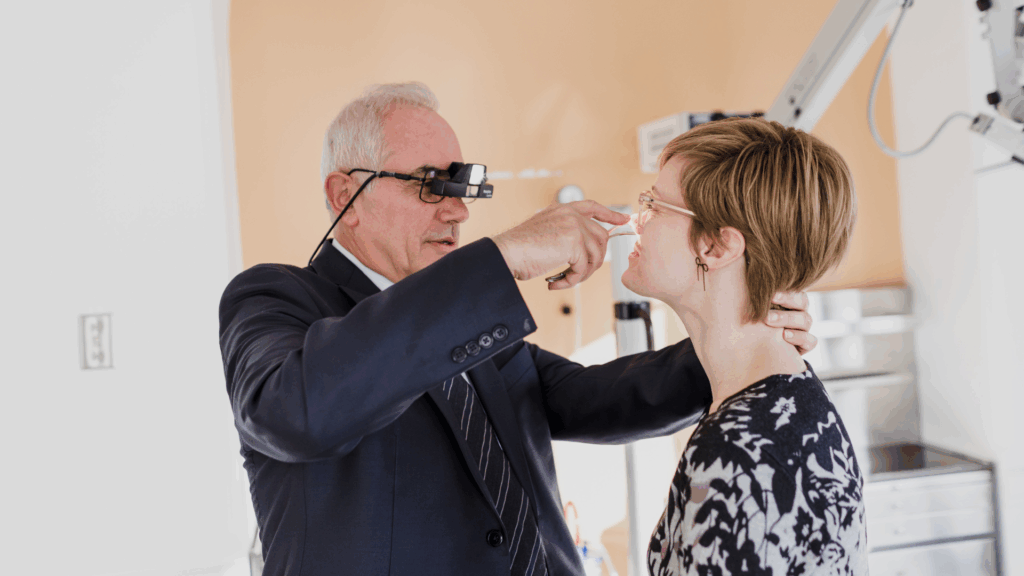
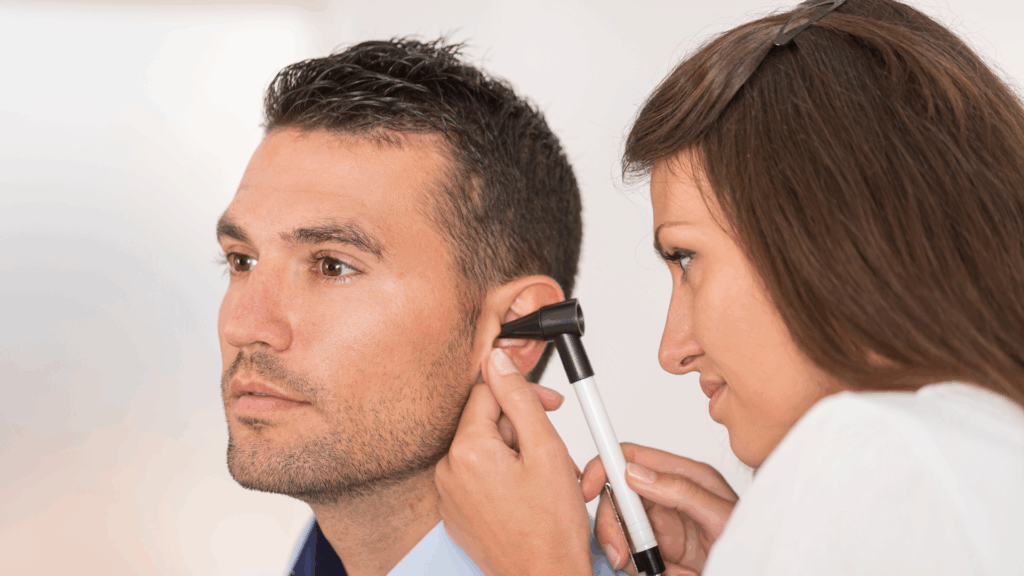
To this end, he will carefully examine your mouth, throat, and larynx. This initial assessment will allow him to more clearly identify any obstructions that may be causing a swallowing problem, as well as any associated muscle weakness or neurological disorders.
In particular, he will focus on the oral and pharyngeal cavities to better understand the problem. From these examinations, your ENT specialist will be able to determine more precisely whether your dysphagia is related to a structural cause (stenosis, tumour) or whether it is neurological or functional in nature.
In practice, the ENT specialist works with a multidisciplinary team, and treatment is often provided in collaboration with other healthcare professionals.
In short, your ENT specialist will conduct a thorough evaluation of your dysphagia and provide targeted recommendations.
At Clinique ORL 1851, a team of healthcare professionals provides personalized care tailored to your symptoms or conditions. Schedule a consultation today.